
In short:Theme park motion is high-duty, show-critical machinery: animatronics and 4D seats run electric actuators and servo motors through millions of cycles a year, while carousels and observation wheels need slip rings to get power and data onto the rotating structure. Size every axis for the full operating season, not one show, and design ride safety functions to EN 13814 with a SIL or PL set by risk assessment.
Typical requirements
| 4D seat motion | 3 or 4 DOF (pitch, roll, heave, sway), 3- or 4-seat bases (Kraftwerk) |
|---|---|
| Electric actuator speed (simulation class) | Up to 1.5 m/s (Exlar) |
| Electric vs hydraulic efficiency | About 90% vs 50% (Exlar) |
| Duty | Repetitive shows all day, every operating day: millions of strokes a year on busy axes |
| Design standard | EN 13814-1:2019+A1:2024 design and manufacture; EN 13814-3 inspection |
| Control system integrity | Target SIL set by risk assessment (HSE RR1080) |
Machinery we specify motion for
- Animatronic figures
- Dark ride vehicles
- 4D theatre and motion seats
- Flying theatres and ride motion bases
- Carousels and merry-go-rounds
- Ferris and observation wheels
- Haunted house and show effects
- Interactive attraction props
What theme park motion demands
Theme park machinery has two jobs. It must create convincing motion: a figure that breathes, a seat that pitches with the film, a vehicle that turns to face a scene. And it must do so all day, every operating day, under a formal ride safety regime. The motion components are familiar from industry. What changes is the duty, the environment and the inspection.
Tolomatic lists amusement ride props, animatronic characters, theatre motion seating, motion simulators and haunted houses among its entertainment work, and singles out repetitive ongoing shows as high-duty-cycle applications. Curtiss-Wright Exlar says smooth, repeatable, life-like motion is mandatory for animatronics, and that roller screw actuators deliver it over millions of cycles.
Electric vs hydraulic vs pneumatic for rides and figures
| Drive | Where it still wins | Trade-offs |
|---|---|---|
| Hydraulic | Very large, very fast figures and heavy motion bases | Power unit, oil leaks near guests, efficiency around 50% (Exlar) |
| Pneumatic | Large 4D theatres, simple fast effects | Compressors, noise, hard to stop mid-stroke |
| Electric (ball or roller screw) | Animatronics, seats, motion bases, effects | Higher actuator cost; must be sized for life and heat |
Exlar quotes electric speeds up to 1.5 m/s and about 90% efficiency, with less maintenance, less infrastructure and quieter running. Kraftwerk builds 3- and 4-seat motion bases with 3 or 4 DOF (pitch, roll, heave, sway), recommends pneumatic drive for large theatres and electric for smaller venues, and its electric version needs less infrastructure and runs more quietly. Moog supplies dark ride and 4D theatre motion in hydraulic, electric and hybrid forms. The trend is clear, but the choice is still per axis. Our hydraulic to electric actuator guide covers the conversion maths.
Where the motion components sit
| Machine | Motion | Main components |
|---|---|---|
| Animatronic figure | Many small rotary and linear axes | Servo rod actuators, harmonic actuators, absolute encoders, compact drives |
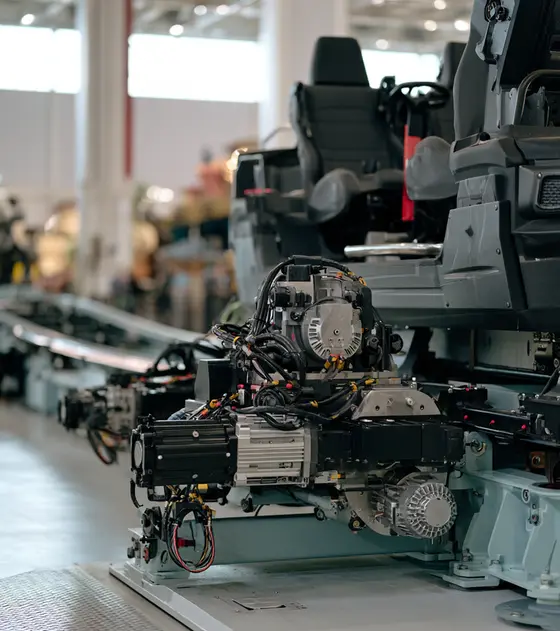
| 4D seat base | 3–4 DOF platform | Three or four electric actuators, drives, show controller |
| Flying theatre or motion base | 6 DOF or lift-and-tilt | Roller-screw actuators, safety-rated drives |
| Dark ride vehicle | Traction, steering, on-board rotation | Wheel-hub gearmotors, DC servo drives, encoders, slip ring for rotating seats |
| Carousel | Continuous rotation, rider lift | Main drive gearbox, large-bore slip ring, crank or actuator lift |
| Observation wheel | Slow rotation | Drive motors and gearboxes, high-current slip ring at the hub |
| Show effects | Short, frequent strokes | Electric rod actuators or small integrated motors |
Animatronics: many small axes, all on show
An animatronic figure is a dense multi-axis machine hidden inside a skin. Each joint is small, but the figure may carry dozens of them, and every one is seen by guests at close range. That drives three choices. First, smoothness: servo-driven ball or roller screw actuators and zero-backlash strain-wave gears avoid the judder that breaks the illusion. Second, packaging: actuators and drives must fit inside the figure’s frame, with cables routed so they survive constant flexing. Third, heat: an enclosed figure has little airflow, so motor and drive continuous ratings must be de-rated and checked against the show’s RMS duty. Absolute feedback on every axis lets a figure start in a known pose without a homing routine in front of guests.
Dark ride vehicles and motion bases
A dark ride vehicle combines a traction drive, often a rotating seat platform and sometimes a motion base, all running from on-board power or a bus bar. That makes it a mobile machine: compact DC servo drives, wheel-hub gearboxes, encoders that tolerate vibration and a slip ring wherever the seat rotates continuously. Vehicle-mounted electronics see shock, dust and temperature swings that a plant room never does, so ask for IP-rated, extended-temperature drives. Larger flying theatres and motion bases use roller-screw actuators sized for high force and long life.
Slip rings for carousels, wheels and rotating rides
Any ride that rotates continuously and carries lighting, music, effects or drives needs a slip ring. Carousels pass circuits through the centre column, so a large-diameter or through-bore unit is normal. Observation wheels and roundabouts turn slowly, which favours carbon-brush high-current slip rings that are large but easy to maintain. Rides with pneumatic effects on the rotating part can combine air passages and electrical circuits with a rotary union. Outdoor and water rides need a sealed marine-grade housing. See slip rings for amusement rides.
Safety and compliance: EN 13814 and HSG175
EN 13814-1:2019, now amended by A1:2024, sets minimum requirements for the safe design, calculation, manufacture and installation of mobile, temporary and permanent amusement devices, from roundabouts and swings to ferris wheels and roller coasters. It applies to new designs and major modifications. EN 13814-3 defines the independent inspections during design, manufacture, operation and use. In Great Britain, HSE’s HSG175 (third edition, 2017) is the guidance for operators, designers, manufacturers, suppliers and inspection bodies.
For control systems, HSE research report RR1080 shows how quantitative risk assessment sets a target SIL for ride control systems, and points to IEC 61508 and EN 13849 techniques such as multiple channels and extensive internal diagnostics. For components that means asking drive suppliers for STO and safe motion ratings, and encoder suppliers for diagnostic and reliability data.
Worked example: sizing a 4D seat actuator for a season
Take a 3-seat, 3-DOF electric base with three actuators. Assume 100 kg per rider as a design mass and 60 kg of seat frame, so 360 kg moving.
- Static load per actuator: 360 × 9.81 ÷ 3 ≈ 1.18 kN.
- Dynamic load: heave acceleration of 0.5 g adds 50%, giving about 1.77 kN.
- Uneven loading: when the base pitches with heavy riders on one side, one actuator carries more than its share. A 1.5 factor brings the peak to about 2.6 kN per actuator.
- Life: a 5-minute film with 300 reversals, run 6 times an hour for 12 hours on 365 days, is 6 × 12 × 365 × 300 ≈ 7.9 million strokes a year. Run the screw’s L10 life calculation at the RMS load over that duty, not the peak.
- Heat: calculate RMS force over a full show cycle, including idle time between shows, and check it against the actuator’s continuous rating at the plant-room temperature.
These are illustrative numbers. The point is that life and heat, not peak force, usually decide the size. Read how to size a linear actuator and ball screw vs roller screw.
Typical pitfalls
- Sizing for one show, not the season. Screw, bearing and brush life must cover the operating year with planned maintenance.
- Ignoring guest-side noise. Fans, gear whine and pneumatic exhaust break the illusion.
- No plan for power loss. Decide what each axis does: hold, lower slowly or return to a safe position.
- Outdoor rides with indoor parts. Wheels and carousels see rain, UV, frost and condensation.
- Treating show control as safety control. Keep safety functions in rated hardware.
- No spares strategy. Parks run long seasons; standardise actuator and motor sizes across figures and effects so a small stock of spares covers many axes, and confirm long-term availability before the design is frozen.
- Forgetting the inspection body. Independent design review and inspection under EN 13814-3 need calculations, safety data and component documentation, so ask suppliers for them early.
What to send an engineer
Send moving masses and geometry, strokes or angles, speeds and accelerations or a sample show file, show length and shows per day, operating days, environment, noise limits, supply, fieldbus and show controller, and the safety functions from the ride’s risk assessment. Our specialist engineering and supply partners can propose matched actuators, motors, drives, encoders and slip rings.
Electric actuators for animatronics and amusement rides
Electric rod actuators drive animatronic limbs and heads, 4D seat platforms, ride motion bases and show effects. They give smooth, repeatable motion that can be reprogrammed with the show, with no hydraulic power unit or oil to leak. Size them on force, stroke, speed and above all the season's cycle count, because a busy figure makes millions of strokes a year. Roller screws carry high force for long life on motion bases; ball screws suit lighter, faster axes. Specify noise at show speed, IP rating for water effects or outdoor use, side-load guidance, and the end-of-stroke behaviour you need if power is lost.
- Animatronic figures: limb, jaw and body movements
- 4D theatre seats: heave, pitch and roll actuators
- Flying theatres and motion bases: multi-DOF platforms
- Show effects: doors, flaps and props triggered by the ride
- Haunted houses: high-repetition scare effects
Available through our supply network
All linear actuators →Specify linear actuators for theme parks and rides →
Servo motors for animatronic figures and ride systems
AC servo motors drive actuators, wheels, turntables and rotary figure joints, and low-voltage DC servos suit battery or tethered ride vehicles and compact figures. Harmonic actuators package a motor, strain-wave gear, encoder and brake in one hollow-shaft unit for rotary animatronic joints. Size motors on RMS torque over the show profile, add margin for hot plant rooms or enclosed figures, and specify a holding brake on any axis that carries gravity load. Ask for multi-turn absolute encoders so figures do not need to home each morning.
- Animatronic figures: rotary neck, wrist and torso joints
- Dark ride vehicles: traction and on-board rotation
- Turntables and rotating show sets
- Interactive props: compact low-voltage axes
Available through our supply network
All servo and stepper motors →Specify servo and stepper motors for theme parks and rides →
Slip rings for carousels and ferris wheels
Carousels, observation wheels and rotating ride vehicles need power and data on the moving structure without cable wrap. Large through-bore slip rings sit around the centre column of a carousel; heavy carbon-brush units carry high current for lighting, music and on-board drives at the slow speeds of wheels and roundabouts. Rotating rides with pneumatic effects can combine air channels with electrical circuits in one unit. Specify every circuit's current and voltage, data and video channels, the bore, outdoor sealing and the maintenance interval the park will accept.
- Carousels: power and lighting through the centre column
- Observation wheels: power and data to the rotating structure
- Rotating ride vehicles: drive power and control on board
- Water rides: sealed slip rings for wet zones
- Rotating effects: air or vacuum combined with electrical circuits
Available through our supply network
All slip rings →Specify slip rings for theme parks and rides →
Encoders for ride position and safety feedback
Ride control relies on knowing where vehicles, platforms and figures are, and safety functions such as overspeed and position monitoring are only as good as their feedback. Absolute encoders avoid homing runs at start of day; multi-turn versions hold position through power loss. Rugged non-contact designs tolerate the vibration of ride vehicles. Capacitive linear encoders with wide mounting tolerances suit actuator and track position in dirty or vibrating places. Specify the interface, resolution at the load, temperature and IP rating, and the safety data the ride's SIL or PL target needs.
- Motion bases: actuator position for closed-loop control
- Dark ride vehicles: steering and turntable angle
- Animatronic joints: absolute angle at the output
- Observation wheels: hub angle and speed monitoring
Available through our supply network
All encoders and feedback →Specify encoders and feedback for theme parks and rides →
Gearboxes for ride drives and animatronic joints
Ride drives and figure joints need a reduction between a fast servo motor and a slow, high-torque output. Strain-wave component sets give zero backlash and high ratios in a short length for animatronic shoulders and necks. Planetary gearboxes give high efficiency for wheel, turntable and winch drives, and rotating-housing planetary units let a drive wheel mount directly over the gearbox on ride vehicles. Choose on peak and emergency-stop torque, not just running torque, and check life over the full operating season.
- Animatronic joints: zero-backlash strain-wave reduction
- Ride vehicle traction: wheel-hub planetary drives
- Turntables and carousels: main drive reduction
Available through our supply network
All gearboxes and harmonic drives →Specify gearboxes and harmonic drives for theme parks and rides →
Safety-rated servo drives for rides
Ride and show drives need Safe Torque Off with stated SIL or PL, brake control, and a fieldbus that the ride and show controllers share. High-current DC drives suit vehicle-mounted traction and battery systems; compact drives fit inside figures and seat bases. Specify the safety functions from the ride's risk assessment, ambient temperature in plant rooms or vehicles, IP rating for vehicle-mounted drives and whether a second encoder input is needed for position monitoring at the load. Plan for diagnostics too: drives that log faults, temperatures and overloads make the daily pre-opening checks and the annual inspection quicker.
- Motion bases: synchronised multi-axis drives with STO
- Ride vehicles: DC traction drives
- Animatronics: compact drives inside the figure
Available through our supply network
All servo drives →Specify servo drives for theme parks and rides →
Show and ride motion controllers
A show controller plays motion profiles to actuators and figures in time with audio, video and lighting, while the ride control system handles vehicle dispatch and safety. Multi-axis EtherCAT controllers synchronise dozens of axes on a 1 ms cycle. Keep the safety functions in a dedicated safety controller or safety-rated drives, and specify how motion is authored, how it is triggered by the ride, and which timecode or protocols it must follow. Ask how show files are backed up and restored, because a replaced controller must play exactly the same motion the next morning.
- Animatronic figures: playback of programmed motion
- 4D theatres: seat motion synchronised to film
- Show effects: cues triggered by vehicle position
Available through our supply network
All controllers and plcs →Specify controllers and plcs for theme parks and rides →
Standards to have in view
- EN 13814-1:2019+A1:2024 (amusement rides and devices: design and manufacture)
- EN 13814-2:2019 (amusement rides and devices, part 2; devices inspected under EN 13814-3 follow parts 1 and 2)
- EN 13814-3:2019+A1:2024 (requirements for inspection during design, manufacture, operation and use)
- HSG175 (HSE: fairgrounds and amusement parks, guidance on safe practice, third edition 2017)
- IEC 61508 (functional safety, SIL)
- EN ISO 13849-1 (safety-related parts of control systems, PL)
- IEC 60529 (IP codes)
Which standards apply depends on the end product and its market. Your engineer will confirm what the component itself needs to meet.
Frequently asked questions
Which standard applies to amusement ride design in the UK and Europe?
EN 13814-1:2019, amended by A1:2024, sets minimum requirements for the safe design, calculation, manufacture and installation of mobile, temporary or permanent amusement devices such as roundabouts, swings, ferris wheels and roller coasters. EN 13814-3 covers the independent inspections during design, manufacture, operation and use. In Great Britain, HSE's HSG175 gives guidance on safe practice for the industry.
Are electric actuators replacing hydraulics in animatronics and motion bases?
Increasingly, yes, though hydraulics still suit the largest, fastest figures. Exlar quotes up to 1.5 m/s and about 90% efficiency for electric actuators against about 50% for hydraulics, with no oil leaks, less infrastructure and quieter running. Kraftwerk offers pneumatic seats for large theatres and electric seats for smaller venues. Moog builds hydraulic, electric and hybrid motion systems.
What slip ring does a carousel or observation wheel need?
A large through-bore or frameless slip ring around the centre column or hub, carrying power for lighting, music, on-board effects and sometimes drives, plus control signals or Ethernet. Rotation is slow, so a carbon-brush design can carry high current with straightforward maintenance. Specify circuits, currents, voltages, data, bore, outdoor IP rating and the inspection interval the operator will accept.
How do I size an actuator for an animatronic figure?
Work out force and speed at the joint from the moving mass and lever arm, then size for the whole season: cycles per show times shows per day times operating days. Busy axes reach millions of strokes a year, so screw life, not peak force, often decides the size. Check RMS force for heat, add guidance for side loads and specify the quietest option that meets the motion.
What safety level do ride control systems need?
It depends on the ride and the hazard. HSE research report RR1080 shows how quantitative risk assessment can set a target Safety Integrity Level for ride control systems and points designers to IEC 61508 and EN 13849 techniques, such as multiple channels and extensive diagnostics, to achieve it. Ask drive and encoder suppliers for the safety data that supports your target.
What should I send for a ride or animatronics enquiry?
Send the moving mass and geometry, stroke or angle, speed and acceleration, motion profile or show file, show length and shows per day, operating days per year, indoor or outdoor environment including water and temperature, noise limits, supply voltage, fieldbus and show controller, and the safety functions the ride's risk assessment requires.
Sources
- NSAI: BS EN 13814-1:2019 Safety of amusement rides and amusement devices, design and manufacture
- Genorma: EN 13814-1:2019+A1:2024
- BSI: BS EN 13814-3:2019+A1:2024 requirements for inspection
- HSE: HSG175 Fairgrounds and amusement parks, guidance on safe practice
- HSE: RR1080 A study of the generic safety-integrity requirements of fairground rides
- Curtiss-Wright Exlar: entertainment and simulation
- Moog: simulation (dark rides and 4D theatres)
- Tolomatic: arts and entertainment applications
- Kraftwerk: SFX motion seats
- Blooloop: Kraftwerk electric SFX eMotion seats
Figures are summarised from the sources above and from manufacturers' published data on the date shown. Always confirm against the current datasheet for your exact part.